
Relocate
We Moved Our Family to Portugal. Now We’ll Help You Move Yours.
In 2019, we were a family in Oakland, California — two kids, a cat, and three dogs — dreaming about a different kind of life. By 2023, we were living it. We navigated the visas, the bureaucracy, the international pet transport, the school search, the culture shock, and every “what have we done” moment in between.
That journey is why Vida Portugal exists. We don’t offer relocation advice from a brochure. We offer it from experience — the kind you only get by actually packing up your life and rebuilding it 5,000 miles away.

Why Americans Are Choosing
Portugal
You already know the reasons — that’s why you’re here. But it helps to see them clearly
Ranked #7 Worldwide
Safety
Portugal ranks 7th in the world on the Global Peace Index (2025). The US ranks 128th. For families with children, that number alone changes everything.
Healthcare
Universal public healthcare that actually works. Private insurance for a family costs a fraction of what you’re paying in the US — and medications that cost hundreds of dollars back home can cost nothing through the public system.
Cost of living
Your dollar goes further. Housing, food, childcare, and education are all significantly more affordable than in most US metros — without sacrificing quality of life.
Work-life balance
Portugal’s culture prioritizes people over productivity. Long family dinners, walkable cities, outdoor living year-round, and a pace of life that gives you room to breathe.
Remote work infrastructure
Excellent internet, a thriving coworking scene, and a time zone 5–8 hours ahead of the US East Coast — close enough to overlap with your team, far enough to get your mornings to yourself.
A welcoming culture
English is widely spoken in Lisbon, Porto, and the Algarve. The expat community is growing fast — the number of Americans living in Portugal grew 239% between 2017 and 2022. You won’t be alone.
One of the best countries in the world for kids
Portugal ranks 4th in the world for child well-being according to UNICEF’s Innocenti Report Card — including 2nd globally for children’s mental health. Portuguese culture genuinely revolves around family: children are welcomed everywhere, restaurants are kid-friendly by default, and communities look out for one another. Public education is world-class and free, and there are dozens of international schools across the country — most of them teaching in English — offering IB, British, and American curricula at a fraction of what you’d pay for private school back home.
A great place to retire
Portugal consistently ranks among the best countries in the world for retirement. The combination of affordable healthcare, low cost of living, mild climate, safety, and a relaxed pace of life makes it an ideal place to enjoy your next chapter. The D7 visa offers a straightforward residency pathway for retirees with pension or investment income — and your US Social Security benefits transfer seamlessly.
Which Visa Is Right for You?
The right visa depends on how you earn your income, your moving timeline, and whether
you want to establish your day-to-day lifestyle full-time in Europe.
Let's find your specific legal pathway in 30 seconds
1. How is your primary income earned?
Passive & Retirement Wealth
Pensions, rents, dividends, savings drawdown
Active Remote Work / Contracting
Employee on W2/contract salary with US firm
Local Business / Entrepreneurship
Starting a local venture, investment, or branch
High-Skilled Employment
Offered a specialized corporate job in Portugal
2. What is your presence expectation?
Move Primary Life (Full Time)
Willing to spend 183+ days/year in Portugal
Plan B / Ultimate Flexibility
Only want to visit 7-10 days a year, keeping US base
Select option 1 and 2 above to instantly view your matched residency playbook.
Which Visa Is Right for You?
The right visa depends on how you earn your income, whether you plan to work in Portugal, and how much time you intend to spend here. Here’s a high-level comparison of the five most common pathways for Americans
⭐“Not sure which path fits? That’s exactly what our initial consultation is for.”
We’ll review your income, family situation, and goals, and recommend the visa pathway that makes the most sense.
There’s no one-size-fits-all answer..
What Vida Portugal Handles for You
Relocating isn’t just about getting a visa. It’s about rebuilding your daily life in a new country. We’ve done it ourselves, and we help you with every piece of the puzzle:
Visa Strategy & Application
We work with our immigration lawyers — in both northern and southern Portugal — to determine the right visa for your situation and manage the application from start to finish.
Tax Planning
Our US-Portugal tax advisor helps you navigate cross-border obligations — FBAR, FATCA, double taxation treaties, and Portugal’s tax incentive programs — so you’re compliant on both sides of the Atlantic
Finding Your Home
Whether you’re renting first or buying right away, our real estate agency partner helps you find the right property in the right neighborhood. We know which areas work for families, for remote workers, and for retirees
See our Buy page
Schools
Portugal offers public, private, and international school options. We help you understand the system, identify schools that match your children’s needs, and navigate enrollment — because we did it for our own kids.
Pets
We moved three dogs and a cat across the Atlantic. It’s not simple — EU pet import regulations, microchipping, rabies certificates, USDA endorsements, airline policies — but it’s absolutely doable. We know the process inside out because we’ve been through it ourselves, and we guide you through every step so nothing gets missed
Healthcare
We help you understand how Portugal’s public healthcare system (SNS) works and guide you through the steps to access it — including obtaining your social security number (NISS) and your número de utente de saúde, which is the healthcare number that gives you access to the public system. We can also guide you through the private insurance landscape so you understand your options, though you’ll purchase your policy directly.
Banking and admin
NIF (tax number), Portuguese bank account, utility setup, phone and internet — the unglamorous but essential infrastructure of daily life. We handle it..
Cultural adjustment
The pace of life, the bureaucratic culture, the way people do business here — it’s different. We help you adjust with realistic expectations, not rose-tinted promises
Our fee
€5,000
Concierge Fee
for full relocation clients. This covers your end-to-end coordination from initial consultation through settled life in Portugal. Legal, tax, and property costs are separate and paid directly to those providers.
The Bureaucracy: What You’ve
Heard Is Probably True
Yes, Portugal is a bureaucratic country. If you’ve read anything about moving here, you’ve probably come across warnings about paperwork, wait times, and government offices. Most of it is true. But it’s also manageable — if you understand how things actually work on the ground. That’s what we wish someone had told us before we moved, and it’s a core part of what Vida Portugal is for.
Portugal is modernizing — and the progress is real
Portugal is a country that is actively and visibly modernizing its government systems. Year over year, you can see meaningful progress — new digital platforms, streamlined processes, fewer in-person requirements. But modernization doesn’t happen overnight, and the gap between the old and new systems creates a reality where some things are immediate and others take months, sometimes even years. Patience is part of the deal.
AIMA is getting better — but it’s not there yet
When AIMA replaced SEF in 2023, it inherited a massive backlog of immigration cases. Since then, it has introduced new online filing systems, moved renewals to a digital portal, and reduced the number of steps in many processes. Wait times have shortened significantly. But AIMA is still far from ideal — processing times remain variable, technical glitches still pop up, and the system can feel opaque if you don’t know how to navigate it. Having the right legal support makes an enormous difference.
Property documentation can be tricky — especially for older homes
If you’re buying property — particularly a traditional house or anything built before modern licensing requirements — the documentation process can be complicated. Missing licenses, outdated registrations, and discrepancies between what’s built and what’s on paper are common. This is one of the areas where our real estate expertise and legal network make the biggest difference
Think twice before taking on construction
Construction permits in Portugal can take years. New regulations are improving timelines — the government has introduced tacit approval deadlines and a mandatory digital platform — but the reality on the ground is still slow. Add labor shortages and material cost increases to the mix, and a renovation that looks like a six-month project can easily stretch to two or three years. Unless you can afford the time and uncertainty between licensing and actual construction, we generally recommend buying a property that’s ready to live in or needs only cosmetic updates
None of this should scare you off
The bureaucracy is real, but thousands of Americans have successfully navigated it — including us. The key is knowing what to expect, starting early, and having the right people in your corner. That’s exactly what Vida Portugal provides
Ready to start your new chapter?
We’ve been where you are. Let’s talk about your Portugal plan.
Where in Portugal?
Portugal is a small country with remarkably diverse regions. Where you buy depends on what you're looking for — and prices, lifestyle, and property types vary significantly from one area to the next. For a deeper look at specific cities, neighborhoods, and what daily life looks like in each part of the country, explore our Find Your Place regional guides.
URBAN · INTERNATIONAL
Lisbon & Surroundings

Portugal's capital and the surrounding areas — Cascais, Estoril, Sintra, and Setúbal. Lisbon is cosmopolitan, walkable, and well-connected internationally. Cascais and the Estoril coast offer a beachside alternative just 30 minutes from the city. Setúbal and the Arrábida coast provide a more local, less tourist-driven lifestyle within easy reach of the capital.
Median prices in Lisbon exceed €5,000/m², prime areas reach €8,000–€12,000/m²
Cascais and the Estoril coast range from €4,000 – €6,000/m²
Strong rental demand, particularly for short-term lets in central Lisbon
Widest selection of international schools in the country
Best for: Urban lifestyle, international schools, remote work, proximity to the airport
CULTURE · VALUE
Porto & Northern Portugal
Porto is Portugal's second city — historic, creative, and increasingly international. The Douro Valley wine region, Braga, Guimarães, and Viana do Castelo offer a more traditional Portuguese experience at a fraction of Lisbon prices. This region is gaining momentum with American buyers who want authenticity over resort life.
Porto city center ranges from €3,000–€4,500/m², well below Lisbon
Northern interior often below €1,500/m²
Quintas and rural properties far more accessible than the south
Lisbon-Porto high-speed rail in development — boosting corridor values
Best for: Culture, food and wine, value, quintas, a more Portuguese experience
SUNSHINE · RENTAL INCOME
The Algarve
Portugal's southern coast — the most established market for international buyers. From the dramatic cliffs of Lagos to the resort towns of Vilamoura and Albufeira, the Algarve offers year-round sunshine, world-class golf, and a large English-speaking community. The eastern Algarve (Tavira, Olhão) remains quieter and more affordable.
Average prices around €3,400/m², with significant variation by area
Villas near beaches and golf courses regularly command €800,000+
Strongest short-term rental market in Portugal — high occupancy year-round
Large established expat community, particularly British and Northern European
Best for: Sun and beach, retirement, rental income, golf, established expat infrastructure
VALUE · AUTHENTIC
The Silver Coast
The stretch of Atlantic coastline between Lisbon and Porto — Óbidos, Peniche, Nazaré, Caldas da Rainha, and Foz do Arelho. Often called Europe's best-kept secret, the Silver Coast offers dramatic surf beaches, medieval towns, and a slower pace of life at prices well below Lisbon or the Algarve. It's increasingly popular with Americans looking for authenticity and value.
Prices typically range from €2,000–€2,800/m², roughly half of Lisbon
Mix of townhouses, modern villas, and renovation projects
Peniche and Nazaré are world-class surf destinations with growing communities
Óbidos is one of Portugal's most charming medieval towns
Best for: Value, surf and beach lifestyle, charm, buyers priced out of Lisbon or the Algarve
SPACE · RURAL
Alentejo
Portugal's vast, unhurried interior — rolling plains, cork forests, medieval towns, and the wild Vicentina coastline. Alentejo is where you go when you want space, quiet, and a deep connection to traditional Portuguese life. The Comporta coast, at the region's northern edge, has emerged as a high-end destination drawing international buyers — but the interior and the rugged southern coast remain among Portugal's most affordable and unspoiled areas.
Interior prices among the lowest in Portugal, often below €1,000/m²
Comporta is the exception — prices rival the Algarve
The Vicentina Coast (Vila Nova de Milfontes, Zambujeira do Mar) offers wild Atlantic beaches within a protected natural park — development is strictly limited, which keeps it pristine but also means fewer services
Large plots, farmhouses, and estates at prices unthinkable elsewhere in Europe
Limited international schools — better for retirees and remote workers
Best for: Space, privacy, rural lifestyle, wine, large properties, wild coastline
ISLAND LIFE · NATURE
The Islands — Madeira & Azores
Portugal's Atlantic islands offer something no mainland region can: true island life with EU standards of living. Madeira is subtropical, well-connected, and increasingly popular with remote workers. The Azores are wilder, greener, and more remote — a genuine off-the-beaten-path choice.
Madeira prices average €2,000–€3,000/m² in Funchal, less outside
Azores remain among the most affordable areas in all of Portugal
Madeira has direct European flights and strong digital nomad infrastructure
Azores offer dramatic landscapes and a genuinely off-the-beaten-path lifestyle
Best for: Island lifestyle, nature, remote work (Madeira), adventure and solitude (Azores)
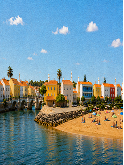
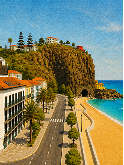
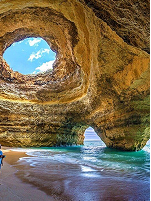
Explore What Portugal Has to Offer
From golden coastlines to cobblestone villages — find the region that feels like home




Ready to start your new chapter?
BOOK A FREE CONSULTATION
We’ve been where you are. Let’s talk about your Portugal plan.
We guard your fiscal telemetry with absolute confidence. Vida Portugal will never share or vend your contact data to secondary marketers.
Common Questions
How much does it cost to relocate to Portugal?
It depends on your family size, visa type, and lifestyle expectations. At a minimum, budget for visa application fees, health insurance, a rental deposit (typically 2–3 months’ rent), and our €5,000 concierge fee. Legal and tax advisory costs are separate. We provide a personalized cost estimate during your initial consultation.
Do I need to speak Portuguese?
Not to get your visa or to live comfortably in major cities. English is widely spoken in Lisbon, Porto, and the Algarve. However, learning Portuguese will deepen your experience and is required at A2 level if you eventually apply for citizenship. We can recommend language programs that work for busy adults and families
Can I keep my US job and work remotely from Portugal?
Yes — the D8 (Digital Nomad) visa is designed exactly for this. You’ll need to demonstrate remote income of at least €3,680 per month from non-Portuguese sources. Many of our clients keep their US careers and simply work from Portugal. The time zone overlap with the East Coast makes this very manageable.
What about my US taxes?
You remain a US taxpayer regardless of where you live — the US taxes citizens on worldwide income. Moving to Portugal adds a second layer of tax obligations. The key is coordination: FBAR, FATCA, the US-Portugal double taxation treaty, and Portugal’s own tax system all need to work together. Our cross-border tax advisor handles exactly this.
How do I move my pets?
We moved three dogs and a cat, so we know this process intimately. The basics: your pets need a microchip, a rabies vaccine administered after the chip, an EU health certificate from a USDA-accredited vet, and USDA APHIS endorsement. Start the paperwork at least three months before your move date. Airline policies vary widely, especially for larger dogs. We connect you with specialized pet transport services and walk you through every step.
What’s the school system like?
Portugal offers three tracks: public schools (free, taught in Portuguese), private Portuguese schools, and international schools (taught in English, with IB or American curricula). International school tuition ranges from roughly €6,000 to €20,000 per year — a fraction of comparable US private schools. Public schools are a strong option for younger children who can immerse in Portuguese. We help you evaluate the options based on your children’s ages, language abilities, and your long-term plans.
How long does the whole process take?
It depends on several factors: whether you’re renting or purchasing property, which visa you’re applying for, your family size, and how quickly your consulate can schedule an appointment. For D7 and D8 visas, the full process from document preparation to landing in Portugal typically takes 6 to 9 months. The D2 entrepreneur visa tends to take 9 to 12 months due to additional business plan review. Within that timeline, document preparation takes 1 to 3 months (the FBI background check alone can take 6 to 10 weeks), consulate processing runs 30 to 90 days, and after arrival you’ll need to attend an AIMA appointment to receive your residence permit. Consulate appointment availability varies — high-demand locations like San Francisco and New York tend to have longer waits. If you’re buying property as part of your move, factor in additional time for the property search and transaction. The single best thing you can do is start early — we recommend beginning the process at least 6 months before your target move date.
Can my family come with me?
Yes, but how and when depends on the visa type. With the Golden Visa and D3 visa, you can begin family reunification immediately. With the D7 and D8, there is currently a two-year waiting period before you can sponsor dependents through family reunification. However, family members can apply for their own visas simultaneously, or accompany you if included in the original application at the consulate stage. We help you plan the most efficient pathway for your whole family..

Your trusted partner for moving, living, and investing in Portugal.
Monthly insights on buying property and relocating.
© 2026 Vida Portugal. All rights reserved.